
Google Ads’ “Website Optimizer” Is Coming: What It Means and How to Get Ahead
- December 5, 2025
-
365admin2015
- Digital Marketing
 3 mins read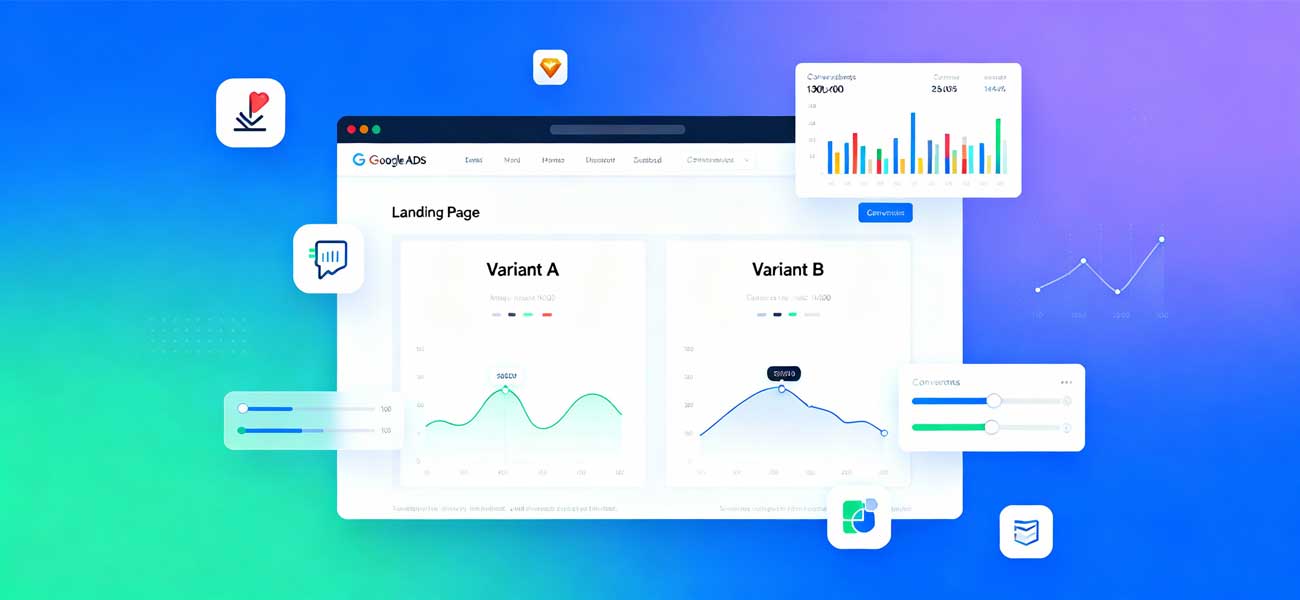
Google Ads is piloting a native Website Optimizer that brings landing page experimentation inside the ads platform, signaling a renewed focus on turning paid clicks into measurable conversions. Early reporting points to help documentation and interface hooks that indicate a built-in testing workflow closely tied to GA4 and Google Ads conversion data.
What the new tool is (and isn’t)
Embedded, not standalone. Experiments are created and managed within the Google Ads environment, streamlining how advertisers connect traffic, variants, and outcomes.
Landing-page first. The emphasis is on testing ad destinations—headlines, hero sections, CTAs, and layout blocks—rather than full-site overhauls.
GA4-dependent. Access typically requires a linked GA4 property with appropriate permissions, and reports suggest auto-creation of a basic GA4 setup if one isn’t present.
Why this matters in 2025
The post-Optimize gap. Since Google Optimize sunset, many teams have juggled third-party testing tools that live outside the ads workflow, slowing iteration and splintering data.
Closing the loop. Tight integration with Google Ads and GA4 could make it easier to identify winning pages faster, reinforcing Quality Score signals and improving CPA efficiency.
A foundation for automation. Reports indicate a code-snippet model rather than a visual editor, which aligns with AI-driven, programmatic modifications of page elements over time.

What to do now to prepare
Solidify measurement. Ensure GA4 is properly linked to Google Ads, with key conversions (purchases, leads, sign-ups) clearly defined and validated.
Standardize landing pages. Build modular templates with clear sections for headlines, benefits, proof, and CTAs so variants can be tested quickly and meaningfully.
Align with best practices. Keep pages fast, mobile-first, and message-matched to queries and ad copy; slow or misaligned pages blunt smart bidding and asset automation.
Practical testing ideas to try first
Value proposition above the fold. Test specific vs. broad promises, and pair with a concise subhead that mirrors top-performing ad headlines.
CTA clarity and placement. Trial action verbs (“Get pricing,” “Start free trial”) and compare single vs. repeated CTAs in long pages.
Social proof framing. Rotate logos vs. star ratings vs. short quotes to see which proofing style lifts conversion rate for your audience.
Form friction. Experiment with multi-step forms vs. single-step, or hide nonessential fields to reduce drop-off on mobile.
How this may evolve
Expect “lighter” controlled tests at first, focused on the ad-to-landing experience, with deeper, server-side or multi-environment testing still better served by dedicated CRO suites.
Watch for native experiment surfacing under Reports/Experiments inside Google Ads and for clearer guidance in official announcements when broader access begins.
If the Website Optimizer reaches general availability, marketers will gain a faster, more unified path from campaign idea to tested landing page, anchored to GA4 outcomes and ad performance signals. Preparing your analytics, templates, and testing cadence now will help you take advantage on day one.
Contact us
Contact us to discuss your Digital Marketing requirement. Get in touch with us by sending a message through our contact form and we will reply back ASAP. We can discuss how we can strategically offer Digital Marketing services for your organization.
Outsourced365 Services are designed to help you grow
Contact us Today!
Why Companies Build Websites with Outsourced365
With our web design services, you will get:
- Modern, conversion-focused layouts
- Responsive design across all devices
- Optimized user experience and navigation
- Scalable websites built for growth

Related Posts
See all posts