
What Is Website Maintenance? Everything Businesses Need to Know in 2026
- June 19, 2026
-
365admin2015
- Outsourcing
 6 mins read
  For many businesses, a website launch feels like the finish line.
Months of planning, design revisions, development work, content creation, and testing culminate in a digital presence that finally goes live. Teams celebrate the launch, attention shifts back to day-to-day operations, and the website gradually becomes something that simply exists in the background.
Unfortunately, that assumption can be costly.
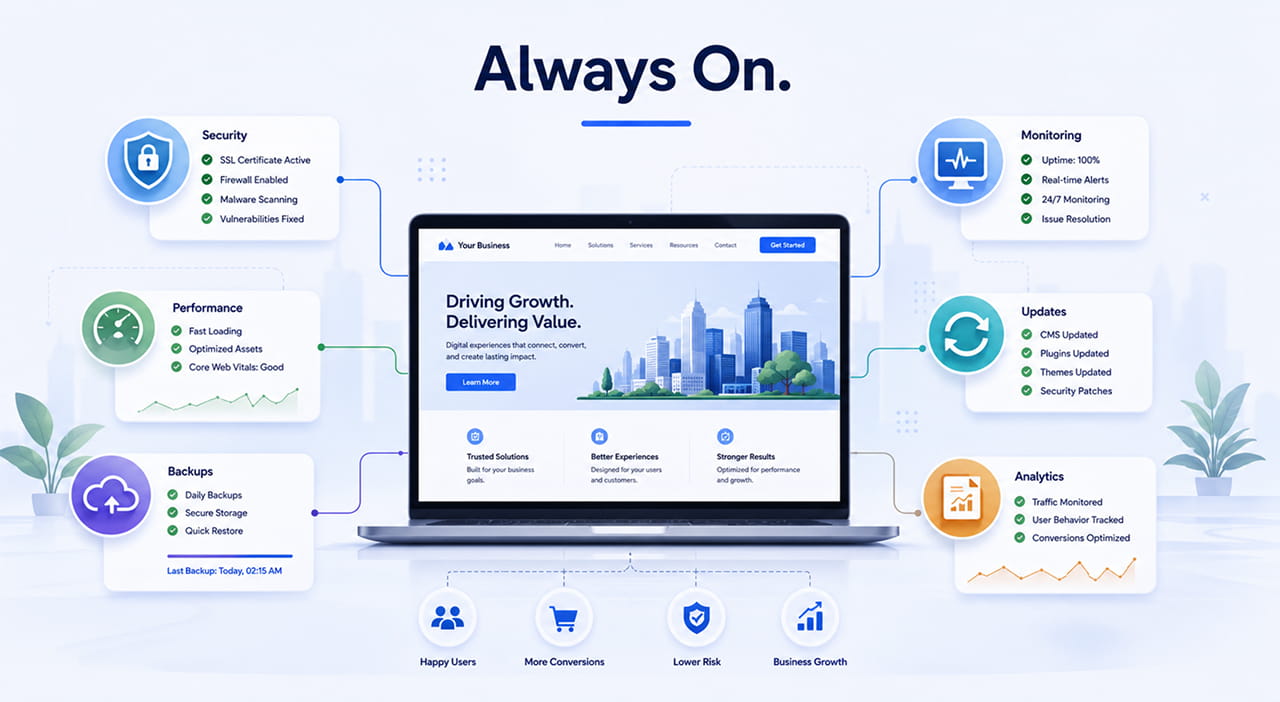
A website is not a static business asset. It is a living digital environment that requires ongoing attention to remain secure, functional, and effective. Software updates need to be installed, vulnerabilities addressed, performance monitored, content refreshed, and technical issues resolved before they begin affecting customers.
In 2026, the importance of website maintenance has become even more pronounced. Customer expectations continue to rise, cyber threats are becoming more sophisticated, and businesses increasingly depend on their websites to generate enquiries, process transactions, support customer relationships, and reinforce credibility.
The question is no longer whether website maintenance is necessary.
It is whether businesses can afford to overlook it.
What Is Website Maintenance?
Website maintenance refers to the ongoing process of monitoring, updating, protecting, and improving a website to ensure it continues operating effectively over time.
While the term often brings to mind simple tasks such as updating plugins or correcting broken links, modern website maintenance encompasses a much broader set of responsibilities. It involves maintaining the technical health of a website while ensuring it continues to meet both business objectives and user expectations.
A well-maintained website should remain secure against emerging threats, perform consistently across devices, provide accurate information, and deliver positive user experiences. It should also adapt to changing technologies, evolving search requirements, and shifting customer behaviors.
In practical terms, website maintenance is less about fixing problems after they occur and more about preventing those problems from disrupting operations in the first place.
Why Website Maintenance Matters More Than Ever in 2026
The digital landscape has changed significantly over the past decade.
Websites have evolved from online brochures into critical business infrastructure. They support ecommerce transactions, capture leads, integrate with customer relationship management systems, facilitate communication, and often represent the first interaction prospective customers have with a business.
As dependence on digital channels increases, the consequences of neglect become more significant.
According to IBM's Cost of a Data Breach Report, the global average cost of a data breach reached US$4.88 million in 2024, highlighting the growing financial impact of security failures. While not every website breach leads to losses on that scale, the statistic underscores how vulnerabilities can quickly escalate into serious business concerns.
At the same time, users have become less tolerant of poor experiences. Research from Think with Google found that as page load times increase from one second to five seconds, the probability of mobile visitors abandoning a website rises by 90%. Slow performance, broken functionality, or outdated experiences can therefore affect not only customer satisfaction but also conversion outcomes.
Website maintenance has evolved from an optional technical exercise into a business continuity function.
What Does Website Maintenance Actually Include?
One reason website maintenance is frequently underestimated is because much of the work happens behind the scenes.
Visitors rarely notice security patches being installed or backups being completed. They do not see developers monitoring uptime or resolving compatibility issues between third-party tools. Yet these activities often determine whether a website performs reliably when customers need it most.
Routine website maintenance commonly includes software updates, security monitoring, backup management, uptime checks, performance optimization, bug fixes, and compatibility testing. It may also involve reviewing analytics, identifying technical SEO issues, refreshing outdated content, and improving user experiences based on behavioral insights.
Businesses investing in Outsource Website Maintenance often discover that the value lies not simply in task completion, but in the consistency of ongoing oversight. Small issues addressed early rarely develop into major disruptions.
Maintenance, therefore, becomes an investment in stability.
Security Is No Longer a Specialist Concern
Cybersecurity is often viewed as the responsibility of large enterprises or dedicated IT departments.
However, smaller organizations are increasingly targeted precisely because they assume they are unlikely to attract attention.
Outdated plugins, unsupported software, expired certificates, and weak access controls can create vulnerabilities that attackers exploit opportunistically. A compromised website can result in downtime, reputational damage, loss of customer trust, and regulatory implications depending on the nature of the incident.
Regular maintenance helps reduce these risks through proactive monitoring and timely updates.
Businesses relying on Website Support Services are often better positioned to identify unusual activity, implement preventative measures, and respond quickly when concerns arise.
Security is not achieved through a single investment.
It is sustained through ongoing vigilance.
Website Performance Influences Business Outcomes
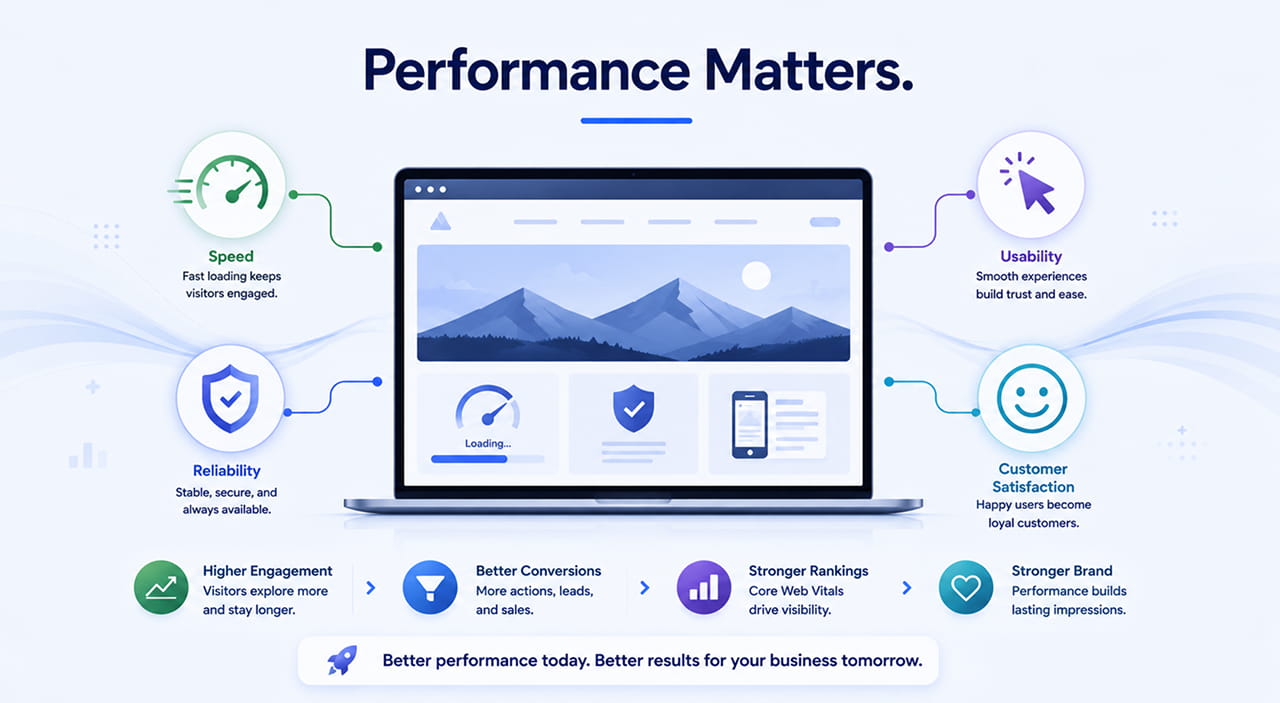
Performance has become one of the most visible indicators of website quality.
Customers expect pages to load quickly, forms to function correctly, and experiences to remain consistent regardless of device or browser. When expectations are not met, frustration often translates into abandonment.
Google's emphasis on Core Web Vitals reflects the importance of user experience within search ecosystems. Businesses investing in performance improvements frequently discover benefits extending beyond rankings. Faster websites encourage deeper engagement, support stronger conversion rates, and contribute to positive brand perceptions.
Ongoing maintenance ensures that websites continue meeting these expectations as technologies, content requirements, and user behaviors evolve.
Businesses complementing maintenance with Web Development Services often find it easier to adapt their digital environments without compromising reliability.
Maintenance Supports Search Visibility Too
SEO is often associated with keyword strategies and content creation, yet technical foundations remain equally important.
Broken links, crawl errors, slow performance, duplicate content issues, and indexing problems can gradually undermine visibility if left unresolved. Search engines favour websites that remain accessible, reliable, and user-friendly.
Businesses investing in ongoing SEO Services alongside website maintenance are often better equipped to identify emerging issues before they begin affecting performance.
Regular reviews help ensure that search engines can continue understanding and evaluating website content appropriately.
Visibility, like security and performance, requires consistency.
It cannot simply be set and forgotten.
Should Businesses Handle Website Maintenance Internally?
The answer depends on resources, expertise, and priorities.
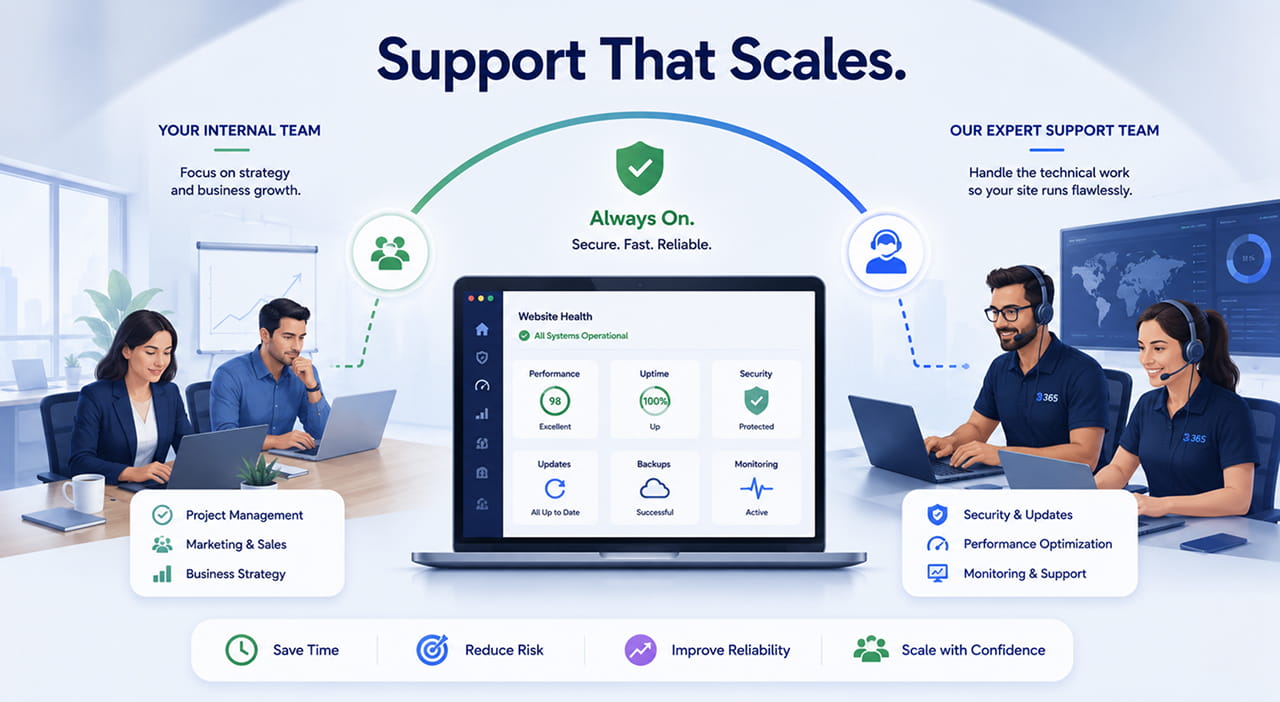
Some organizations maintain internal teams capable of managing ongoing requirements. Others discover that website maintenance competes with initiatives perceived as more strategic, resulting in delays and reactive decision-making.
As websites become more sophisticated, maintaining the necessary skills internally can become increasingly difficult. Security updates, technical troubleshooting, performance optimization, and monitoring all require time and specialized knowledge.
This reality explains why many businesses are turning towards outsourced approaches.
Access to experienced professionals allows internal teams to focus on broader business objectives while ensuring that essential maintenance activities continue uninterrupted.
Outsourcing is not necessarily about reducing costs.
For many organizations, it is about reducing operational strain while improving consistency.
The Cost of Doing Nothing
Website maintenance rarely receives attention when everything appears to function normally.
Its importance becomes most visible when something goes wrong.
A failed plugin update prevents customers from completing purchases. An expired certificate damages trust. Security vulnerabilities result in avoidable disruptions. Performance issues reduce conversions during critical campaigns.
By the time these problems become obvious, the consequences often exceed the investment required to prevent them.
Maintenance is not simply about preserving websites.
It is about protecting business continuity, customer confidence, and growth opportunities.
Conclusion
A website launch is not the end of a digital project.
It marks the beginning of an ongoing responsibility.
In 2026, businesses depend on their websites more heavily than ever before. They serve as sales channels, customer service platforms, marketing assets, and representations of organizational credibility. Maintaining them requires more than occasional updates performed when time permits.
Website maintenance is the process of ensuring that digital experiences remain secure, reliable, relevant, and capable of supporting business goals over the long term.
Businesses that recognize this reality are better positioned to avoid preventable disruptions, strengthen customer trust, and adapt confidently as digital expectations continue evolving.
LET'S TALK: BUILD A MORE SCALABLE APPROACH TO WEBSITE MAINTENANCE
Managing website maintenance internally can quickly become complex as digital demands continue to grow. Security updates, performance monitoring, technical troubleshooting, and ongoing optimization often require more time and specialized expertise than businesses initially anticipate.
At Outsourced365, we help organizations across the US, UK, and Europe simplify website operations through scalable support designed for long-term efficiency and reliability.
From proactive website maintenance services and dependable website support solutions to flexible web development services and ongoing SEO support, our team helps businesses maintain secure, high-performing digital experiences without the complexity of managing large internal technical teams.
If your business is looking for a more flexible and reliable approach to website maintenance, our team can help you get started.
Outsourced365 Services are designed to help you grow
Contact us Today!
Why Companies Build Websites with Outsourced365
With our web design services, you will get:
- Modern, conversion-focused layouts
- Responsive design across all devices
- Optimized user experience and navigation
- Scalable websites built for growth

Related Posts
See all posts