9 Website Features Customers Expect on Your Website in 2026
- June 25, 2026
-
365admin2015
- Outsourcing
 6 mins read
Website features customers expect have evolved significantly in recent years. In 2026, visitors evaluate websites based on speed, usability, personalization, security, and convenience. Businesses that fail to meet these expectations risk losing customers before meaningful engagement occurs.
Customer expectations for websites continue to evolve.
Not long ago, having a professional-looking website was enough to establish credibility and support business growth. Today, that standard has changed significantly. Customers expect websites to be fast, intuitive, mobile-friendly, secure, and capable of helping them find answers quickly.
The growing influence of AI-powered search, changing browsing habits, and increasing competition have raised the bar for every business website.
Visitors are less patient, more informed, and more willing to leave if a website fails to meet their expectations. At the same time, businesses are discovering that website performance plays a larger role in lead generation, customer trust, and revenue growth than ever before.
Companies that adapt to these changing expectations position themselves to attract and retain customers more effectively. Those that fail to evolve risk losing opportunities to competitors that provide better online experience.
Here are nine website features customers increasingly expect to find in 2026.
1. Website Features Customers Expect in 2026: Mobile-First Experiences
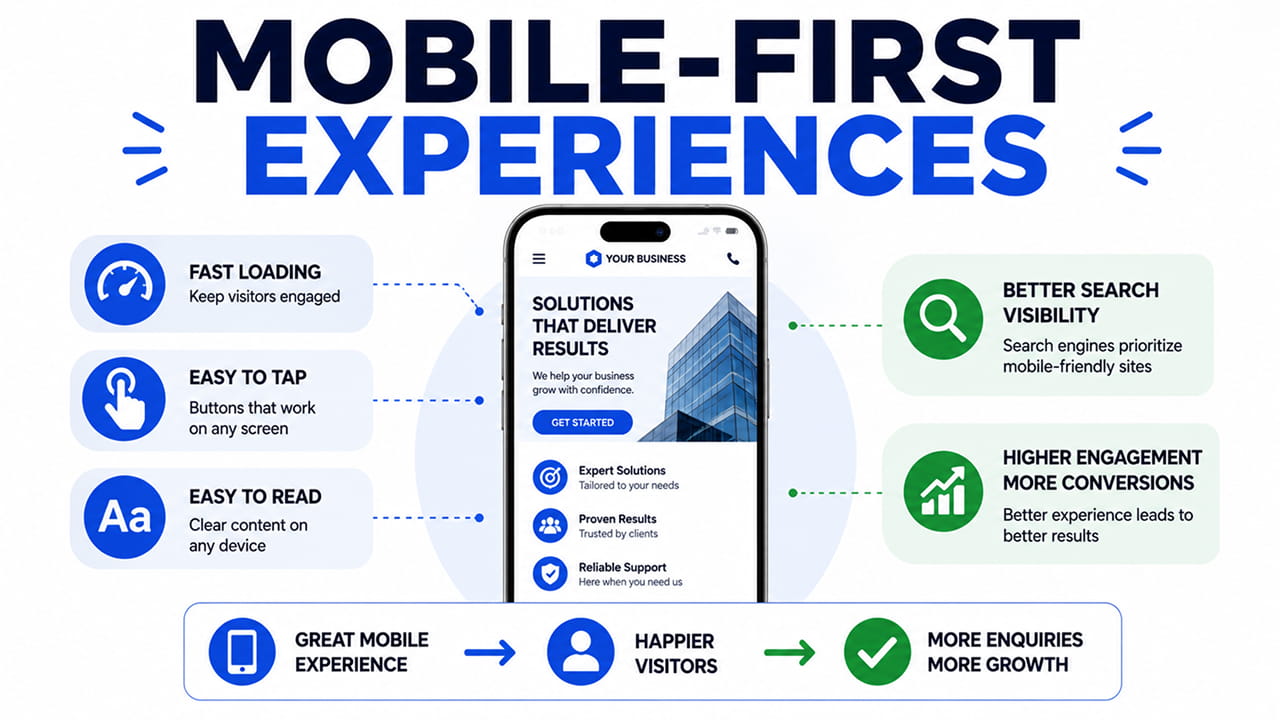
For many businesses, the majority of website traffic now comes from mobile devices. Website features customers expect continue to evolve as digital experiences become more sophisticated.
Customers expect websites to function seamlessly on smartphones and tablets without requiring excessive zooming, scrolling, or navigation adjustments. Mobile-friendly design is no longer a competitive advantage. It is a baseline expectation.
Visitors want pages that load quickly, buttons that are easy to tap, and content that is easy to read regardless of screen size. Websites that fail to provide a smooth mobile experience often experience higher bounce rates and lower conversion rates.
Mobile-first design also supports search visibility, as search engines continue to prioritize websites that deliver positive mobile experiences. Businesses that understand website features customers expect can improve engagement and conversions.
Businesses looking to meet these expectations often invest in professional website development services to ensure their website performs effectively across all devices. According to Statista, mobile devices account for the majority of global web traffic, highlighting why customers increasingly expect mobile-friendly, fast, and seamless website experiences in 2026.
2. Fast Loading Speeds
Customers have little tolerance for slow websites. Modern website features customers expect often focus on speed, usability, and trust.
A website that takes several seconds to load can create frustration before visitors even engage with the content. Performance has become a core component of user experience, influencing how visitors perceive a business and whether they remain on the website.
Fast-loading pages help customers find information quickly and complete actions without unnecessary delays. They also contribute to stronger engagement and improved conversion opportunities.
Many successful businesses now treat website speed as an ongoing priority rather than a one-time optimization project. Businesses looking to meet these expectations often invest in professional website development services.
3. Clear and Intuitive Navigation
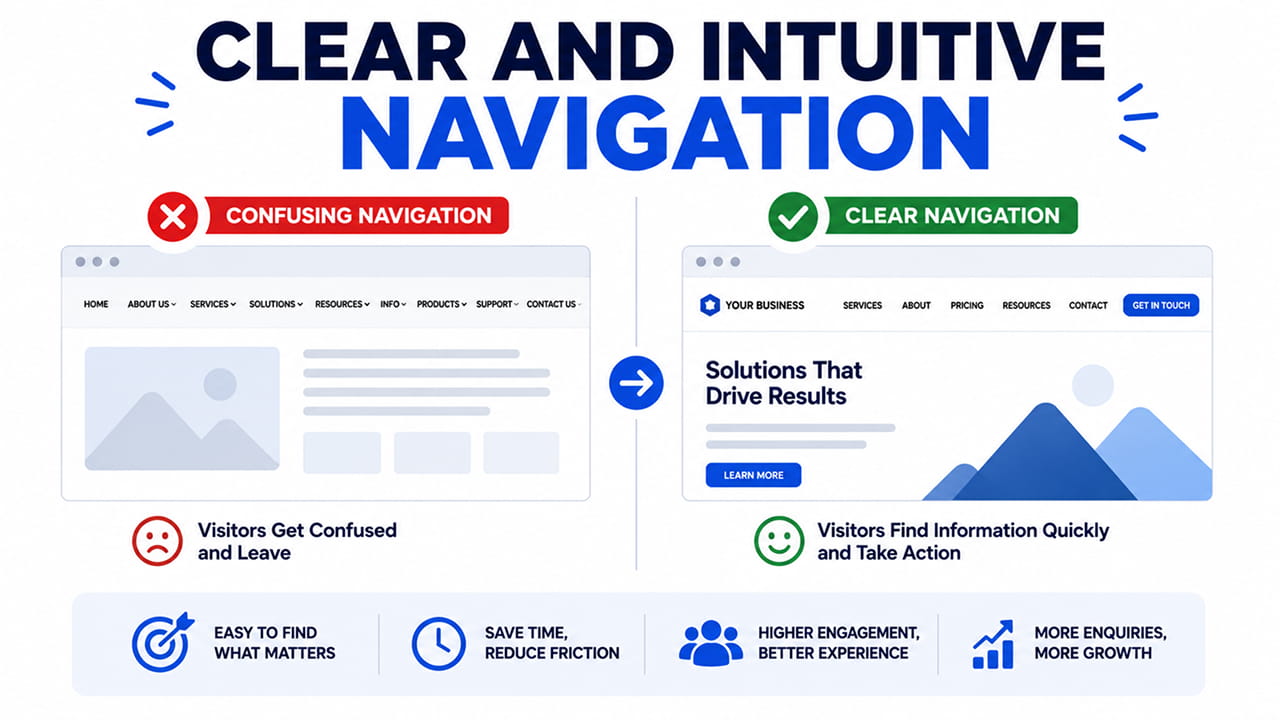
Visitors expect to find information quickly. Website features customers expect increasingly include AI-powered assistance and personalization.
Whether they are searching for services, pricing information, contact details, or product specifications, customers want a navigation structure that feels intuitive and predictable.
Complex menus and cluttered layouts create friction that can discourage users from exploring further. In contrast, websites with clear navigation help visitors move confidently through the customer journey.
Businesses that simplify navigation often improve engagement because customers spend less time searching and more time interacting with valuable content.
4. Trust Signals That Reduce Uncertainty
Trust has become one of the most important conversion factors online. Organizations should regularly evaluate whether their websites include the features customers expect.
Customers want reassurance that they are dealing with a credible and reliable business before sharing information or making purchasing decisions. Website features customers expect can directly influence customer satisfaction and retention.
This expectation has made trust signals increasingly important. Testimonials, reviews, certifications, case studies, security indicators, and client success stories all contribute to establishing credibility.
As cyber security concerns continue to grow, customers also pay closer attention to website security and professionalism when evaluating businesses online. Businesses that invest in ongoing website maintenance are better positioned to deliver reliable customer experience.
5. AI Search-Friendly Content
The rise of AI-powered search experiences is changing how customers discover information online. Businesses that invest in website features customers expect often improve conversion rates.
Instead of browsing multiple websites, many users now receive direct answers from AI-generated summaries and conversational search tools. This shift means businesses must ensure their content is structured clearly and provides useful information that AI systems can understand and reference.
Customers increasingly expect websites to provide direct answers to their questions rather than forcing them to search through lengthy pages.
Well-organized content, descriptive headings, FAQs, and clearly presented information help improve both user experience and visibility within emerging search environments.
6. Accessibility for Every User
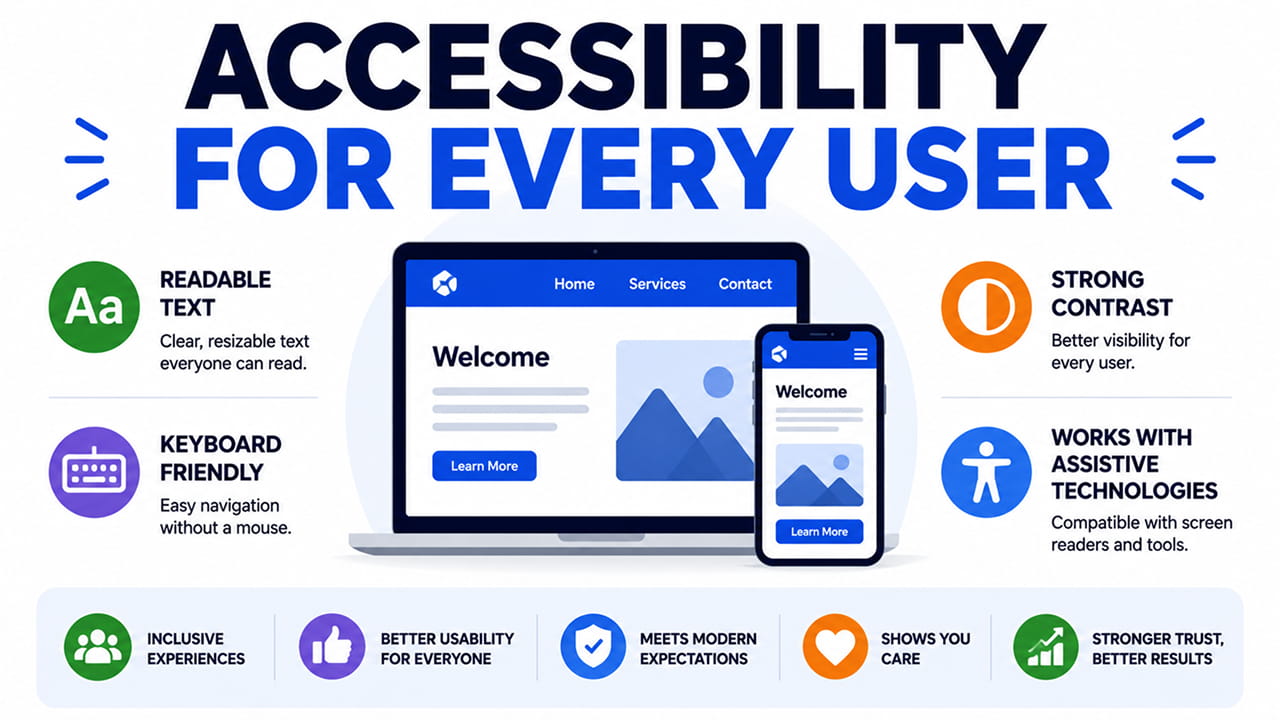
Accessibility is becoming a fundamental expectation rather than a specialized consideration. Website features customers expect should support seamless experiences across desktop, tablet, and mobile devices.
Customers expect websites to accommodate a wide range of abilities and browsing preferences. This includes readable text, sufficient color contrast, keyboard-friendly navigation, descriptive image alternatives, and content that works with assistive technologies.
Businesses that prioritize accessibility create more inclusive experiences while also improving usability for all visitors. Understanding website features customers expect helps businesses make better digital investment decisions.
As digital expectations continue to evolve, accessibility is increasingly viewed as part of delivering quality customer service online.
7. Personalized User Experiences
Customers increasingly expect websites to deliver relevant experiences based on their interests and needs. Website features customers expect should support both mobile and desktop experiences.
Personalization can take many forms, from displaying relevant content and recommendations to simplifying navigation based on previous interactions.
While customers still value privacy and transparency, they also appreciate experiences that help them find relevant information faster. Organizations that improve on website features customers expect often see stronger conversion rates.
Businesses are increasingly using data and behavioral insights to create more tailored website experiences that improve engagement and conversion rates.
8. Seamless Conversion Paths
Customers do not want to work hard to contact a business, request a quote, or make a purchase.
The most effective websites remove unnecessary barriers between interest and action.
Simple forms, clear calls to action, streamlined checkout processes, and visible contact options help visitors take the next step with confidence.
Businesses that prioritize conversion-focused experiences often generate stronger results because they reduce friction throughout the customer journey.
This is one reason why website optimization and search engine optimization services often work best when approached together. Attracting visitors is important, but converting those visitors into customers is where business value is created.
9. Ongoing Performance and Security Improvements
Customers may never see website maintenance happening behind the scenes, but they certainly notice when it is neglected.
Broken pages, outdated functionality, security warnings, and inconsistent performance can quickly damage trust.
Businesses that invest in ongoing website maintenance are better positioned to deliver reliable customer experiences while adapting to changing technologies and customer expectations.
Website maintenance is increasingly viewed as a business necessity rather than a technical task. Regular updates, monitoring, backups, and performance improvements help ensure websites remain secure, functional, and competitive over time.
Customer Expectations Will Continue to Rise
The features customers expect from business websites in 2026 reflect a broader shift in digital behavior. Understanding website features customers expect helps businesses stay competitive.
Visitors expect speed, convenience, trust, accessibility, and relevance. They want websites that help them accomplish their goals quickly and confidently. Website features customers expect continue to shape purchasing decisions online.
While technologies and trends will continue to evolve, the underlying principle remains the same. Businesses that prioritize the customer experience are more likely to generate engagement, build trust, and convert visitors into customers.
The question is no longer whether your website has these features. Companies that prioritize website features customers expect can strengthen their digital presence.
The question is whether your competitors implemented them before you did.
LET'S TALK: KEEP YOUR WEBSITE READY FOR WHAT CUSTOMERS EXPECT NEXT
Customer expectations continue to evolve, and businesses that fail to adapt risk falling behind competitors that offer faster, more intuitive, and more reliable online experiences.
Meeting modern website expectations requires more than an attractive design. Keeping up with website features customers expect helps businesses remain relevant in a rapidly changing digital environment.
It involves ongoing website maintenance, performance optimization, technical improvements, user experience enhancements, and continuous updates to ensure your website remains aligned with changing customer behaviours and digital trends.
At Outsourced365, we help businesses across the US, UK, and Europe build and maintain websites that support long-term growth, customer engagement, and operational efficiency.
Our services are designed to help businesses:
- deliver faster and more reliable website experiences
- improve website performance and user engagement
- maintain secure and up-to-date digital platforms
- support mobile-first and customer-focused website experiences
- strengthen technical SEO and search visibility
- scale website support without expanding internal technical teams
From proactive website maintenance and scalable web development services to ongoing SEO support and performance optimization, our team helps businesses create websites that meet modern customer expectations while supporting long-term business goals.
Ready to ensure your website is equipped for today's customers and tomorrow's opportunities? Reach out through our contact form and we'll get back to you promptly. Let’s identify areas for improvement and build a digital strategy that enhances performance, strengthens user engagement, and supports long-term business growth.
Outsourced365 Services are designed to help you grow
Contact us Today!
Why Companies Build Websites with Outsourced365
With our web design services, you will get:
- Modern, conversion-focused layouts
- Responsive design across all devices
- Optimized user experience and navigation
- Scalable websites built for growth

Related Posts
See all posts