
How to Outsource Website Development Successfully: A Step-by-Step Guide for Businesses
- July 31, 2026
-
365admin2015
- Outsourcing
 6 mins read
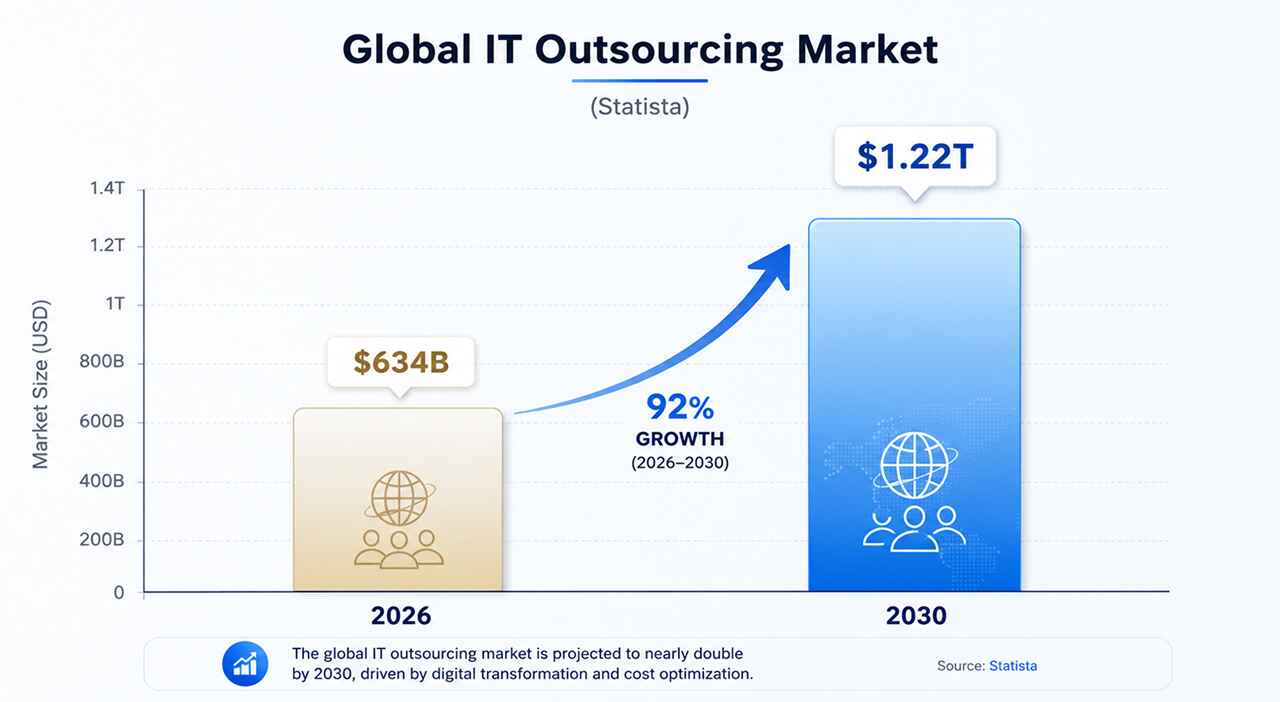
Outsourcing web development has grown from a cost-saving tactic into a mainstream way businesses build and scale their online presence. The global IT outsourcing market is projected to reach $634.18 billion in 2026, according to Statista, and it isn't slowing down from there. But the businesses that get real value from outsourcing tend to follow a similar process, and the ones that don't tend to skip the same few steps. Here's what that process actually looks like.
Outsource web development when you need specialized technical expertise without the cost and complexity of building a large in-house development team. The right outsourcing partner can help businesses access skilled developers, accelerate project delivery, improve scalability, and maintain website quality while internal teams remain focused on core business priorities.
Why So Many Businesses Are Outsourcing Right Now
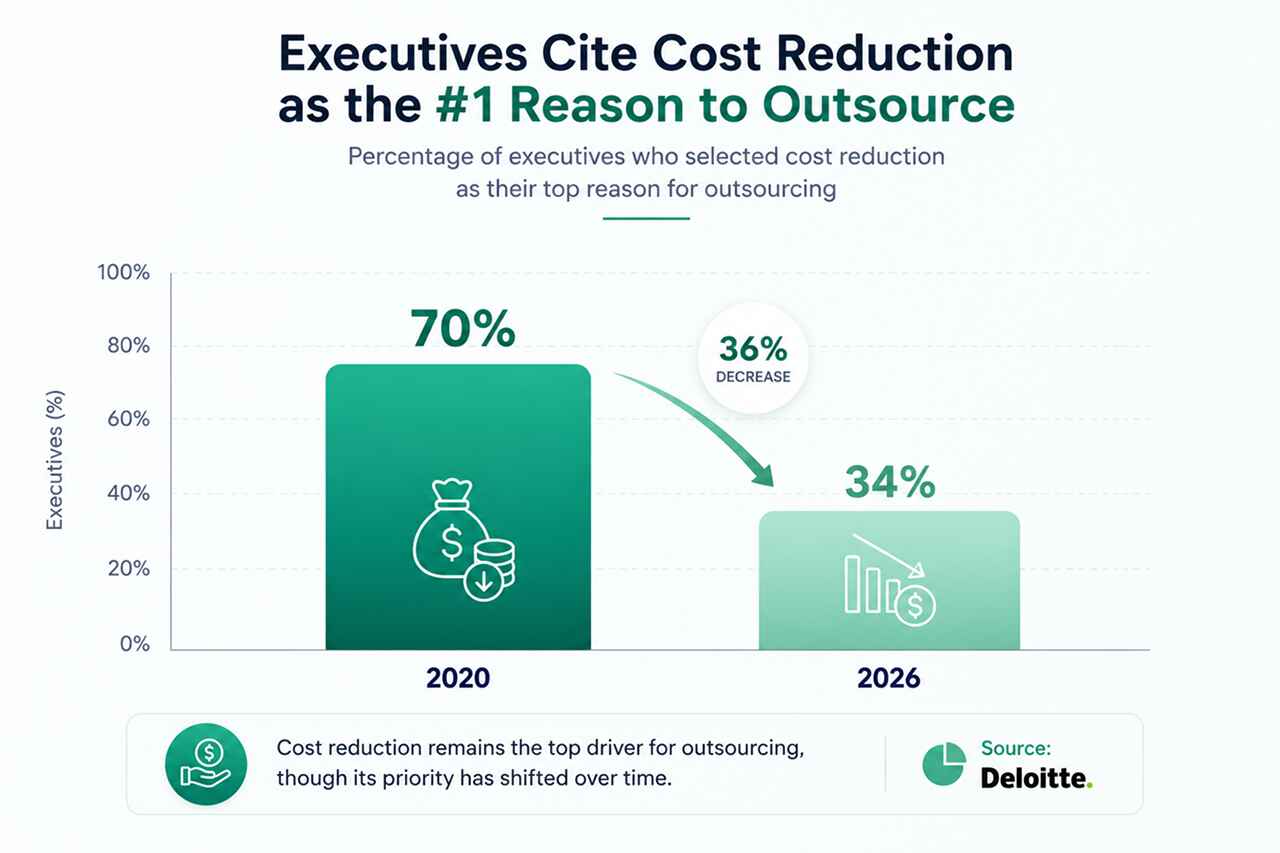
The reasons businesses outsource have shifted noticeably in the past few years. According to Freshcode's 2026 analysis of outsourcing trends, only 34% of executives now cite cost reduction as their primary reason for outsourcing, down sharply from 70% in 2020. The bigger driver today is access to specialized skills and speed to market — capabilities that are increasingly hard to hire for directly. Deloitte's Global Outsourcing Survey found that 76% of executives worldwide now outsource at least some IT functions, and the same research shows 47% of startups treat outsourcing as their primary software development model, up from around 30% in 2020.
The Outsourcing Market at a Glance: Why Businesses Outsource Web Development
A few figures give a sense of just how mainstream this has become:
- The global IT outsourcing market is on track to grow from roughly $634 billion in 2026 to over $1.22 trillion by 2030, according to Statista's market forecast.
- The global web development services market itself is valued at approximately $88–90 billion, growing at around 8% annually.
- By 2026, nearly 70% of enterprises are expected to outsource at least part of their application development lifecycle.
- Large outsourcing contracts (over $5 million) grew 18% year-over-year in 2024–2025, a sign that outsourcing is increasingly used for serious, long-term work rather than one-off projects.
Step 1: Define Scope Before You Talk to Anyone
Before reaching out to any partner, document what you actually want built: project objectives, target audience, a feature list, design preferences, technical requirements, budget range, and what success looks like. This becomes the project brief, and it does two jobs at once — it gives potential partners enough detail to quote accurately, and it becomes the reference point that prevents scope disputes later. The clearer this document is, the fewer hidden costs and surprise change requests show up once work begins.
Step 2: Choose the Right Engagement Model
Different projects call for different commercial structures:
- Fixed price works when scope is completely defined and unlikely to change — a marketing site with approved designs, for example. It offers budget certainty, but changes after the scope is locked usually require formal change requests.
- Time & materials suits projects where requirements are likely to evolve based on feedback or testing, trading some budget predictability for flexibility.
- Dedicated team fits longer-term, ongoing development — an evolving product rather than a one-off build — where a consistent team works with the business over months.
- Full-cycle engagement covers the entire lifecycle — discovery, design, development, QA, deployment, and post-launch support — under one roof, reducing coordination overhead.
If it's not obvious which model fits, a short discovery phase before committing is usually worth the extra time.
Step 3: Vet the Partner's Track Record
This is where outsourcing succeeds or struggles most. Look for demonstrated experience in the relevant technology or platform, a portfolio of genuinely comparable projects, and client references worth actually contacting. For senior roles or complex projects, a live, screen-shared technical conversation is a far better predictor of quality than an asynchronous test alone — it reveals how someone actually thinks through a problem, not just whether they can produce a correct answer under ideal conditions.
Step 4: Structure the Engagement Properly
Once a partner is chosen, the structure should be clear in writing before development starts: a requirements document covering scope and acceptance criteria, milestone-based payments tied to deliverables rather than time elapsed, and an agreed set of collaboration tools. Establishing a shared toolset from day one avoids friction later — most engagements run on a project management board (Trello or Asana for smaller projects, Jira for larger or more technical ones) alongside a direct communication channel for day-to-day questions.
Step 5: Manage the Project Without Micromanaging
Don't wait until the end of the project to find out how it's going. Requesting access to the project management board allows real-time tracking, and reviewing and approving deliverables at the end of each sprint or milestone — rather than only at final delivery — surfaces problems while they're still cheap to fix. At the same time, it's worth resisting the urge to compress timelines to the point where quality suffers; build in buffer time for the unexpected, since even experienced teams refine estimates as they learn more about a project's real complexity.
Step 6: Plan for Launch and Beyond
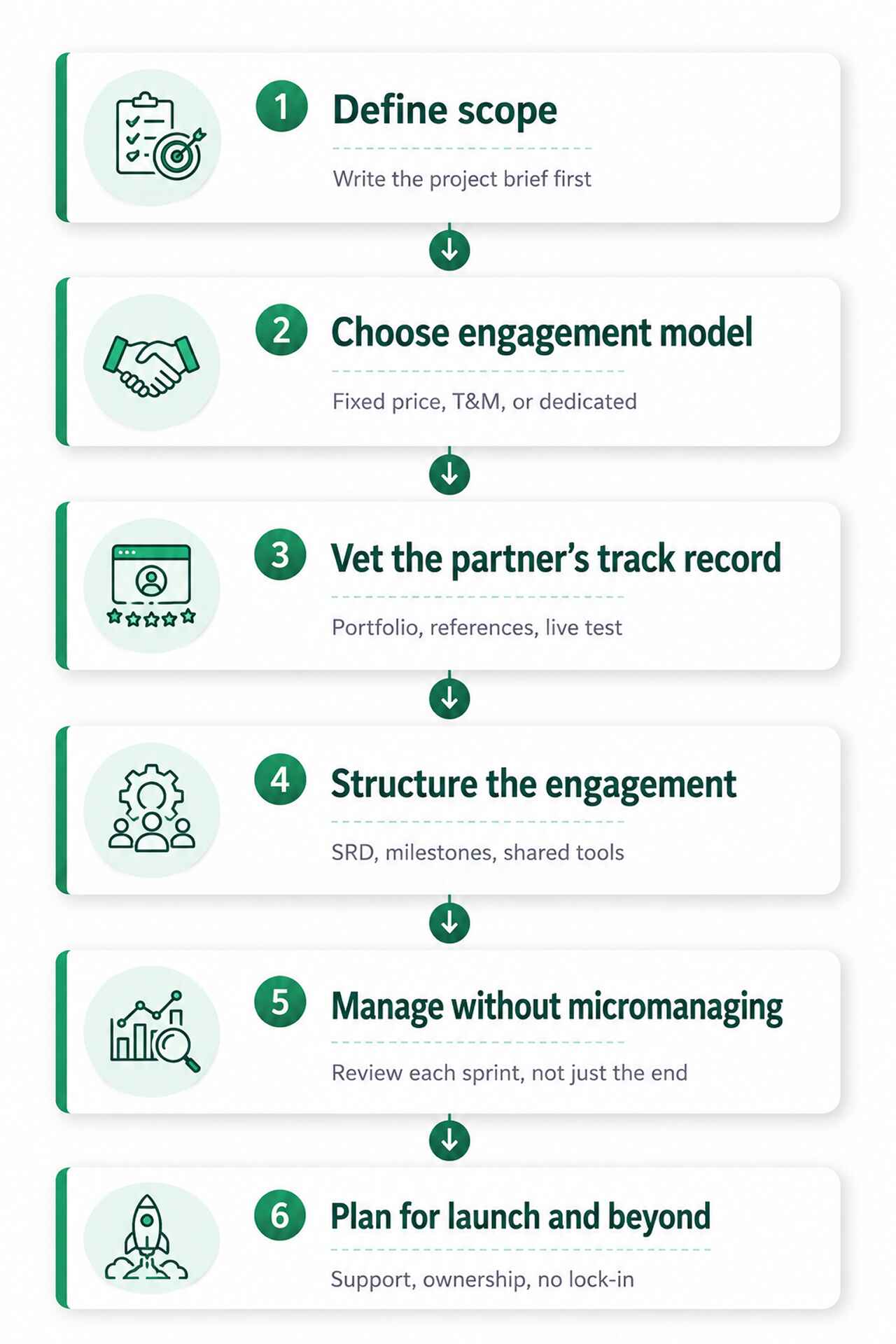
Launch isn't the end of the engagement — it's the point where ongoing support decisions start to matter. Before launch, it's worth agreeing explicitly on who handles bug fixes, security patches, and scaling afterward, and making sure the business retains full ownership of its code, hosting credentials, and domain rather than leaving them under the vendor's account. The goal is support with continuity, not lock-in.
Habits of Successful Outsourcing Engagements
A handful of habits consistently separate the smoothest outsourcing engagements from the bumpier ones: a clear written brief instead of an assumed one, choosing a partner based on track record and comparable work rather than price alone, staying involved through incremental reviews instead of waiting for final delivery, and settling ownership of code and credentials before launch. None of these take much extra time up front, and each one saves considerably more time later.
The data is fairly consistent: outsourcing has moved from a cost-cutting fallback to a mainstream way businesses build and scale their web presence, and the reasons driving that shift — specialized skills, speed, and flexibility — matter more now than raw cost savings. The businesses getting the most out of it aren't the ones finding the cheapest option; they're the ones treating scope, structure, and vetting as seriously as the code itself.
If you're planning an outsourced web project and want to talk it through, outsourced365's web development and web design teams are happy to help.
LET'S TALK: OUTSOURCE YOUR WEBSITE DEVELOPMENT THE RIGHT WAY
Successfully outsourcing website development isn't about finding the cheapest quote or the fastest turnaround. It's about choosing a partner with the right expertise, following a structured process, and maintaining clear communication from planning through post-launch support. Businesses that approach outsourcing strategically consistently achieve better quality websites, faster delivery, and stronger long-term results.
A successful outsourcing partnership starts with clear project goals, detailed requirements, defined milestones, and transparent accountability. When your development partner becomes an extension of your team instead of simply a vendor, you gain the flexibility to scale, improve, and support your website as your business grows.
At Outsourced365, we help businesses across the US, UK, and Europe outsource website development with confidence. Our team helps businesses:
- define clear project requirements before development begins
- access experienced WordPress, Shopify, Joomla, and custom web development specialists
- follow a proven step-by-step development process with complete project visibility
- maintain quality through testing, security reviews, and performance optimization
- build SEO-friendly, mobile-responsive websites designed for long-term growth
- receive ongoing maintenance, updates, and technical support after launch
- scale development resources as business requirements evolve
From planning and developer selection to design, development, testing, launch, and ongoing maintenance, we help businesses outsource website development the right way—reducing risk while delivering websites that perform long after they go live.
Ready to outsource your website development with confidence? Get in touch through our contact form, and we'll show you how a structured outsourcing process can help you build a faster, more secure, and higher-performing website that supports your business for years to come.
Outsourced365 Services are designed to help you grow
Contact us Today!
Why Companies Build Websites with Outsourced365
With our web design services, you will get:
- Modern, conversion-focused layouts
- Responsive design across all devices
- Optimized user experience and navigation
- Scalable websites built for growth

Related Posts
See all posts