
Why Online Retailers Are Outsourcing More Ecommerce Tasks in 2026
- June 12, 2026
-
365admin2015
- Outsourcing
 5 mins read
Ecommerce outsourcing is becoming an increasingly strategic decision as online retailers navigate rising customer expectations, operational complexity, and rapid technological change. By outsourcing specialized tasks, businesses can improve agility, optimize resources, and focus more effectively on growth initiatives. Running an ecommerce business has never been more demanding.
A few years ago, online retailers could focus primarily on maintaining a functional website, processing orders, and running occasional marketing campaigns. Today, the expectations are significantly higher. Customers expect seamless experiences across devices, rapid website performance, accurate inventory information, personalised communications, secure payment experiences, and timely responses regardless of when or where they shop.
At the same time, ecommerce teams are being asked to do more with limited resources. Internal teams often find themselves juggling website updates, seasonal campaigns, product uploads, search optimisation, performance monitoring, technical troubleshooting, and customer experience improvements simultaneously.
It is no surprise, then, that outsourcing has evolved from a cost-cutting tactic into a strategic growth decision.
In 2026, more online retailers are embracing outsourced ecommerce services not because they lack internal capabilities, but because digital commerce has become too complex to manage efficiently through traditional operating models alone.
Ecommerce Operations Have Become More Complex
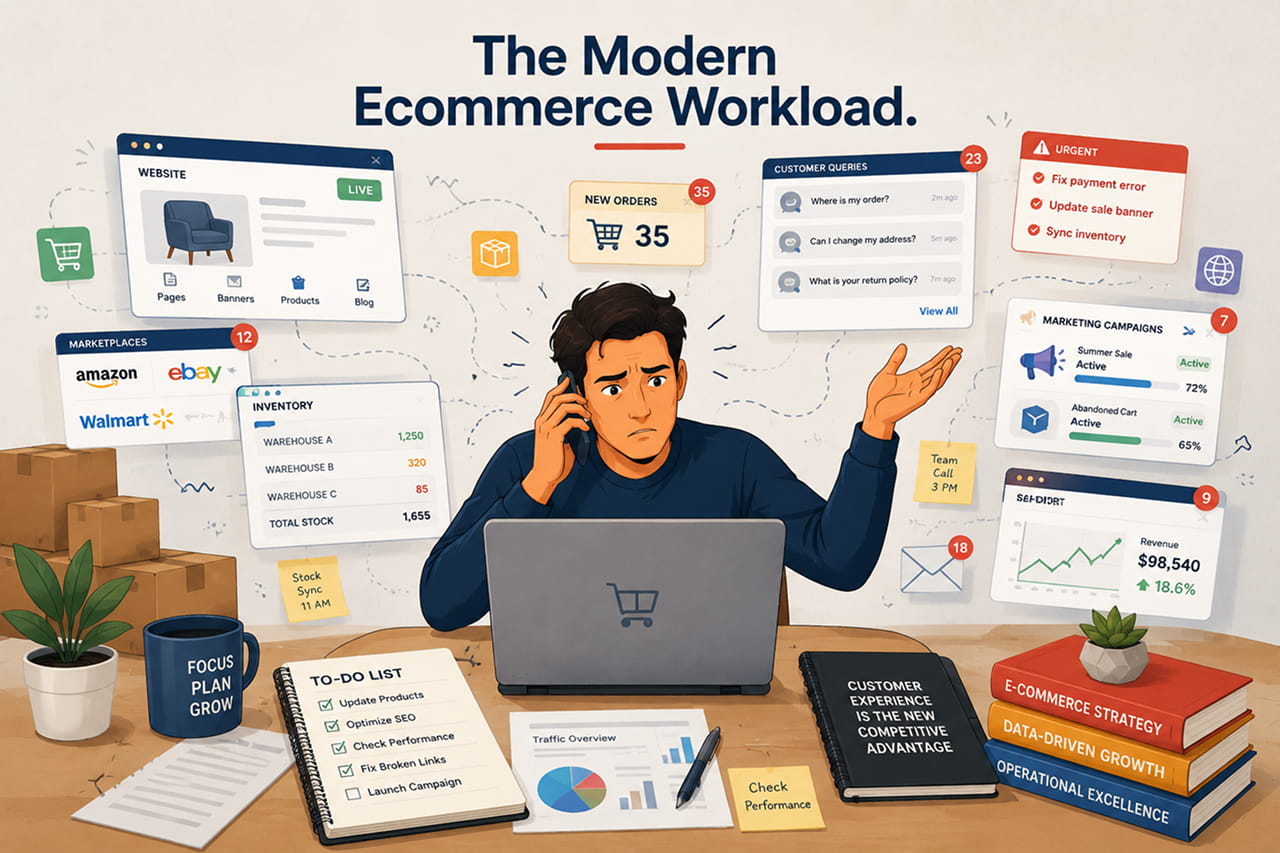
The modern ecommerce ecosystem extends far beyond a shopping cart.
Retailers today are expected to maintain high-performing websites, coordinate inventory across multiple channels, launch campaigns quickly, optimise for search engines, analyse customer behaviour, and respond to evolving market trends. New technologies and changing consumer expectations continue to add layers of operational complexity.
According to Statista, global retail ecommerce sales are expected to surpass US$7 trillion by 2026, highlighting both the opportunities and pressures facing online businesses.
Growth is no longer simply about attracting more customers. It is about sustaining operational excellence as businesses scale. Ecommerce outsourcing enables retailers to scale operations without expanding internal teams.
This growing complexity has encouraged many retailers to rethink how work gets done. Rather than continuously expanding internal headcount, businesses are increasingly identifying specialist functions that can be managed externally without sacrificing quality or control.
The Business Benefits of Ecommerce Outsourcing
Finding and retaining specialised digital talent remains a challenge for businesses across industries. Many businesses adopt ecommerce outsourcing to manage increasing order volumes more efficiently.
Whether hiring experienced developers, SEO specialists, UX professionals, or technical support personnel, recruitment costs continue to rise. Training requirements, employee turnover, and the need for ongoing upskilling only add to the burden.
Deloitte's Global Outsourcing Survey found that organisations increasingly outsource to gain access to specialised expertise and improve agility rather than focusing solely on cost reduction.
For ecommerce retailers, this shift makes practical sense. Ecommerce outsourcing provides access to specialized expertise across critical operational functions.
Building an in-house team capable of supporting every aspect of digital operations can be both expensive and inefficient. Outsourcing allows businesses to access experienced professionals exactly when they are needed without committing to permanent staffing structures that may not always align with operational demands.
The Ecommerce Tasks Retailers Are Outsourcing Most
Not every function needs to remain in-house.
In fact, many of the activities that consume the most time behind the scenes can often be handled more efficiently through experienced external partners. Ecommerce outsourcing allows businesses to focus internal resources on strategic growth initiatives.
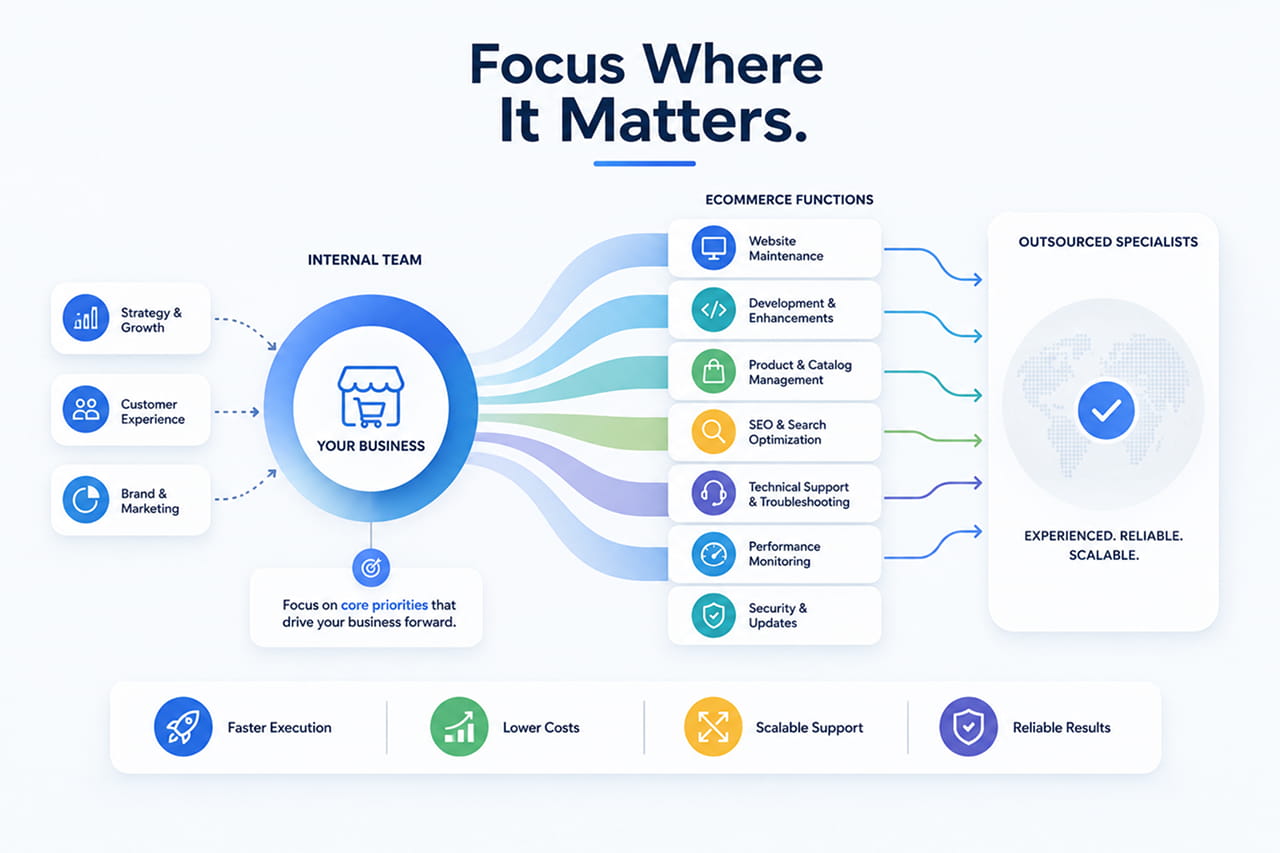
Retailers increasingly outsource tasks such as:
- Website maintenance and ongoing updates.
- Ecommerce website development.
- Product uploads and catalogue management.
- Search engine optimisation initiatives.
- Technical troubleshooting and support.
- Performance monitoring and optimisation.
- Campaign implementation during peak periods.
While these responsibilities may not always be visible to customers, they significantly influence the quality and consistency of the shopping experience. Companies increasingly rely on ecommerce outsourcing to improve flexibility and reduce operational bottlenecks.
Businesses investing in proactive website upkeep often find that outsourced website maintenance helps reduce operational disruptions while allowing internal teams to focus on customer-facing priorities.
Similarly, scalable web development services enable retailers to introduce new functionality, improve user experiences, and adapt more quickly to changing business requirements. Ecommerce outsourcing supports faster adaptation to changing customer expectations.
Outsourcing Is Becoming a Growth Strategy
The conversation around outsourcing has changed.
Historically, outsourcing was often framed as a way to reduce expenses. Today, many retailers view it as a means of increasing organisational agility.
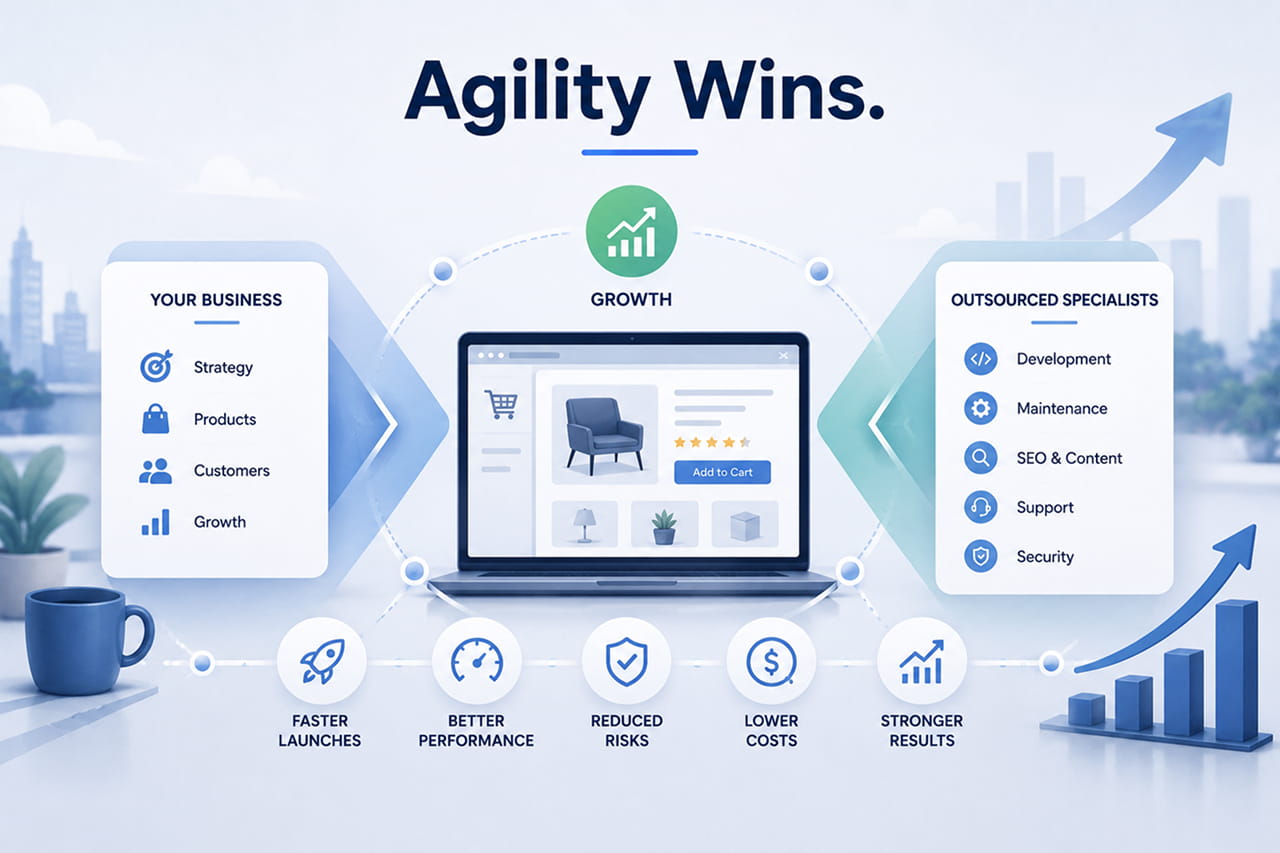
The ability to launch promotions quickly, respond to technical issues promptly, optimise website performance, and execute initiatives without lengthy hiring processes creates meaningful competitive advantages.
Businesses can scale support during seasonal spikes, access specialised expertise for short-term projects, and avoid overwhelming internal teams during periods of rapid growth.
Search visibility also remains a critical consideration.
As ecommerce competition intensifies, retailers increasingly recognise the value of strategic SEO initiatives that strengthen category pages, improve technical foundations, and enhance discoverability. Partnering with providers offering specialised SEO services allows businesses to pursue these objectives without diverting internal resources away from other operational priorities.
Choosing the Right Outsourcing Partner
Not all outsourcing relationships deliver the same outcomes.
The most successful partnerships are built on trust, communication, and shared objectives.
Retailers evaluating outsourcing providers should consider factors such as:
- Relevant ecommerce expertise.
- Responsiveness and communication practices.
- Scalability and flexibility.
- Security awareness.
- Process transparency.
- Long-term support capabilities.
Outsourcing should not feel like handing over control.
Instead, it should function as an extension of the business, providing dependable support that evolves alongside changing operational requirements.
Businesses that establish strong partnerships often discover that outsourced teams contribute not only execution capacity but also valuable perspectives shaped by experience across multiple industries and platforms.
Why 2026 Could Be a Turning Point
Consumer expectations show little sign of slowing. Businesses embracing ecommerce outsourcing can optimize workflows while maintaining service quality.
Faster delivery, smoother digital experiences, better website performance, and more personalised interactions have become standard expectations rather than differentiators.
At the same time, ecommerce teams continue to navigate talent shortages, rising operational costs, and increasingly sophisticated technologies. Ecommerce outsourcing helps retailers navigate the complexities of multichannel commerce.
The retailers that succeed in this environment may not necessarily be those with the largest internal departments. They may be the ones that understand where internal ownership creates value and where external expertise accelerates progress.
Outsourcing is no longer simply about reducing workload. Online retailers frequently use ecommerce outsourcing to strengthen operational resilience. Ecommerce outsourcing provides scalable support as businesses expand into new markets.
It has become a strategic decision that enables businesses to remain agile, maintain operational excellence, and pursue growth without sacrificing efficiency. Strategic ecommerce outsourcing can improve efficiency while supporting sustainable growth objectives.
As 2026 unfolds, retailers willing to rethink traditional operating models may discover that the smartest way to scale is not always by hiring more people. Sometimes, it means building the right partnerships.
LET'S TALK: BUILD A MORE SCALABLE APPROACH TO ECOMMERCE OPERATIONS
Managing ecommerce operations internally can become increasingly complex as customer expectations and digital demands continue to grow. Website updates, technical troubleshooting, search optimisation, and ongoing performance improvements often require more time and specialised expertise than many retailers initially anticipate.
At Outsourced365, we help businesses across the US, UK, and Europe simplify ecommerce operations through scalable outsourcing solutions designed for long-term efficiency and reliability.
Our services are designed to help businesses:
- reduce the operational burden on internal teams
- access experienced ecommerce professionals
- improve website performance and stability
- strengthen search visibility and technical foundations
- scale support more efficiently during periods of growth
- maintain reliable long-term digital operations
From proactive website maintenance and scalable web development services to ongoing SEO support, our team helps businesses maintain secure, high-performing digital experiences without the complexity of managing large internal technical teams.
If your business is looking for a more flexible and reliable way to manage ecommerce operations, our team can help you get started.
Outsourced365 Services are designed to help you grow
Contact us Today!
Why Companies Build Websites with Outsourced365
With our web design services, you will get:
- Modern, conversion-focused layouts
- Responsive design across all devices
- Optimized user experience and navigation
- Scalable websites built for growth

Related Posts
See all posts